

A line snaking down the street from the Paradise Rock Club in Boston, bending around the corner at {street}, is generally a good sign of things to come that night in the venue. This particular evening, it’s host to the penultimate show performed by this incarnation of the band Swans, a longstanding musical force with frontman Michael Gira having remained the only constant member since its inception. And by the time you read this, it’ll be, in one sense at least, over.
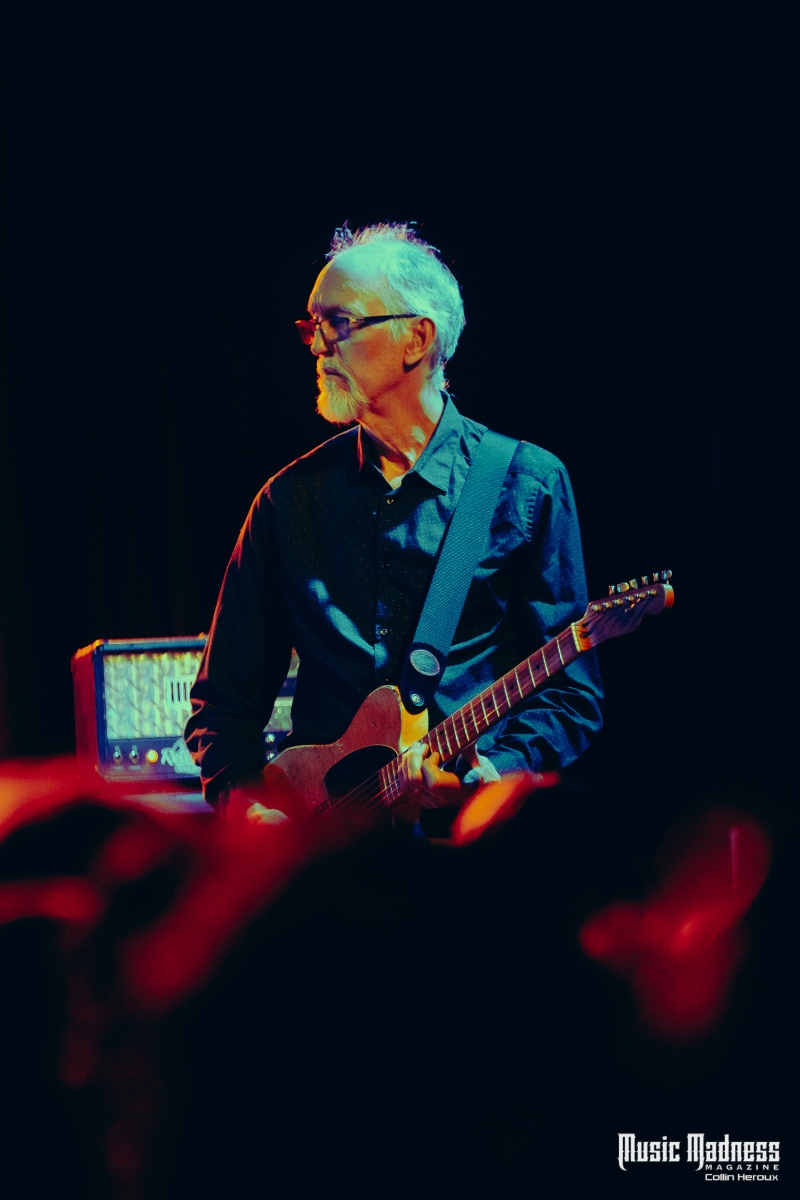
That said, “this incarnation” is the operant phrase here – Gira has announced the ‘end’ of Swans many times, but the band has reemerged consistently after gestation periods with new material. That was the story for their last few albums: leaving meaning. (2019), The Beggar (2023), and now Birthing, released this year. The largest divide in the band’s history was their hiatus from 1997 to 2010, and none of the stylistic changes that have taken place between albums and permutations of the band have approached that level – though Gira has sometimes opted to tour as a stripped-down acoustic project. Spanning nearly fifty years at this point, with some flirtations with gothic majesty and outright pop in the 90s, followed soon by the band’s temporary dissolution, two of the constants at both ends of the Swans chronology are Volume and Repetition, always present as two pillars in their songwriting – even as the grimy, simple brutality Gira mined from the New York underground morphed over decades into the complex orchestrations they practice today. While Swans features a different roster of musicians each time it’s reborn, some faces – such as Norman Westberg, who stands tall stage-left at the Paradise – have had a hand in much of the group’s history.
Birthing finds the band in an era of maximalism, though in a decidedly unhurried way. Nearly every song branches out to vast lengths – while this has long been a mark of Swans’ music, their earlier reunion-era records such as The Seer and To Be Kind counterbalanced their lengthier sections with tighter compositions, perhaps owing to Gira’s time with another project he pursued during Swans’ downtime, Angels of Light. The Beggar and now Birthing eschew that almost entirely in favor of glorious instrumental expansion. The crowd in Boston at a glance is an interesting generational cross-section: the elder segment who very well may have been following the band from its inception; the folks in their 30s and 40s who likely caught on around the comeback when Swans rapidly caught the attention of old and new media alike; and finally, a healthy number of younger people perhaps experiencing the allure of experimental, long-form music that tends to strike around college age. Swans have also remained in the collective musical consciousness as an unexpected brand success, odd for a band who early on earned quite a prickly public presence. There’s quite literally always at least one guy in their Filth shirt (the one with the teeth) at any reasonably well-attended show, should you need a fun Where’s-Waldo style game to play with friends between sets; and you have to hand it to them, shirts emblazoned with “You Fucking People Make Me Sick” and “Public Castration Is A Good Idea” were also good ideas.
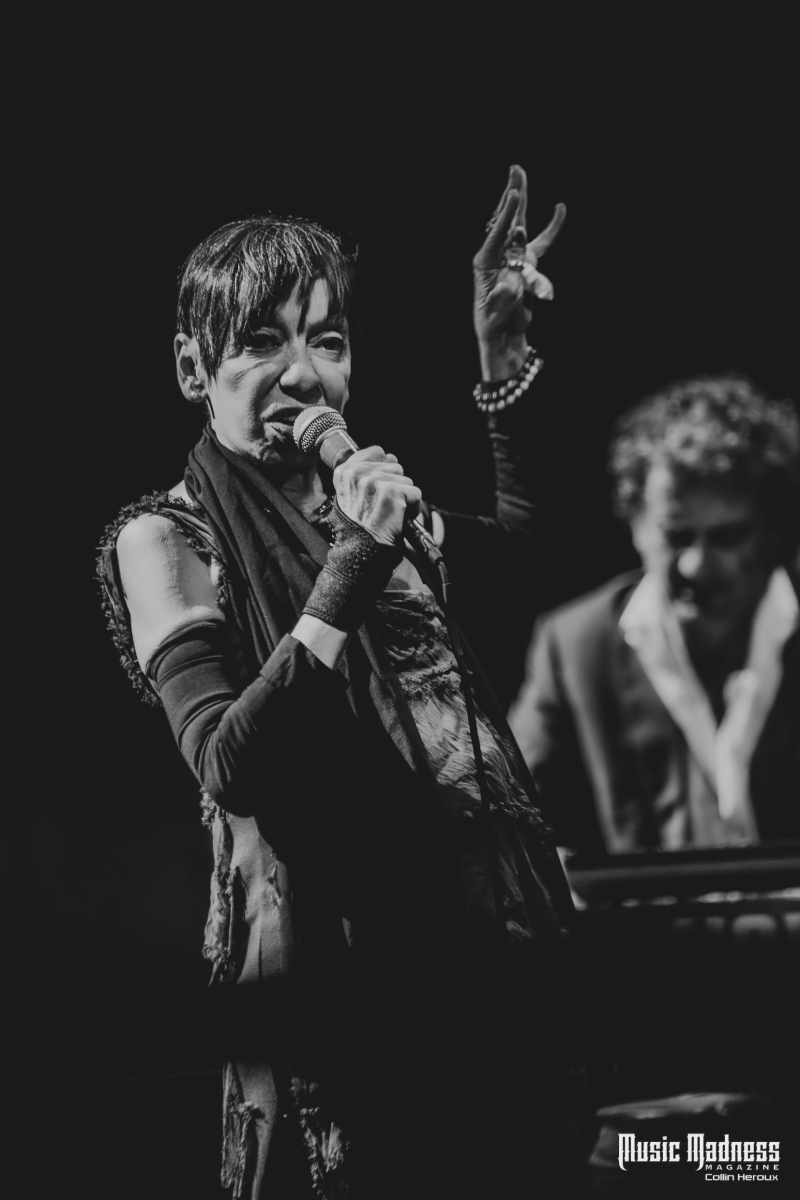
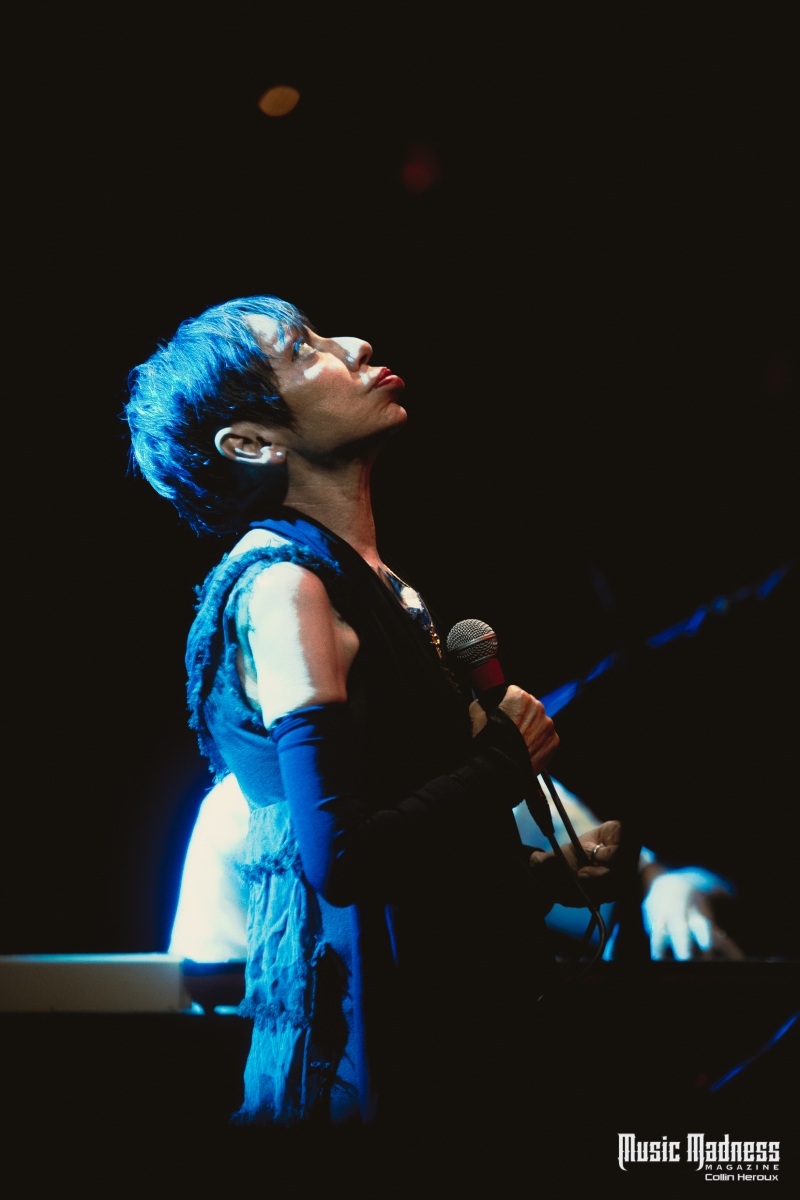
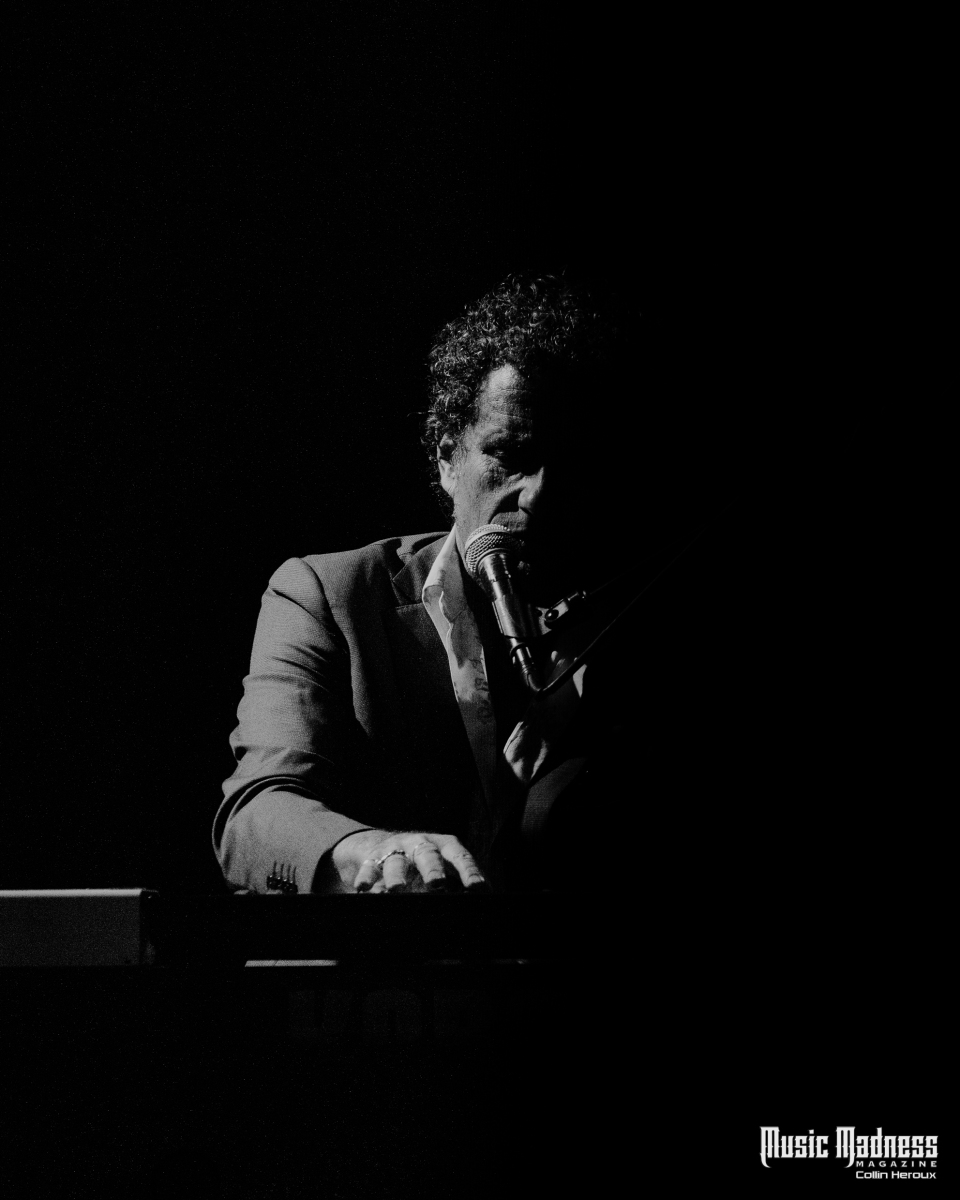
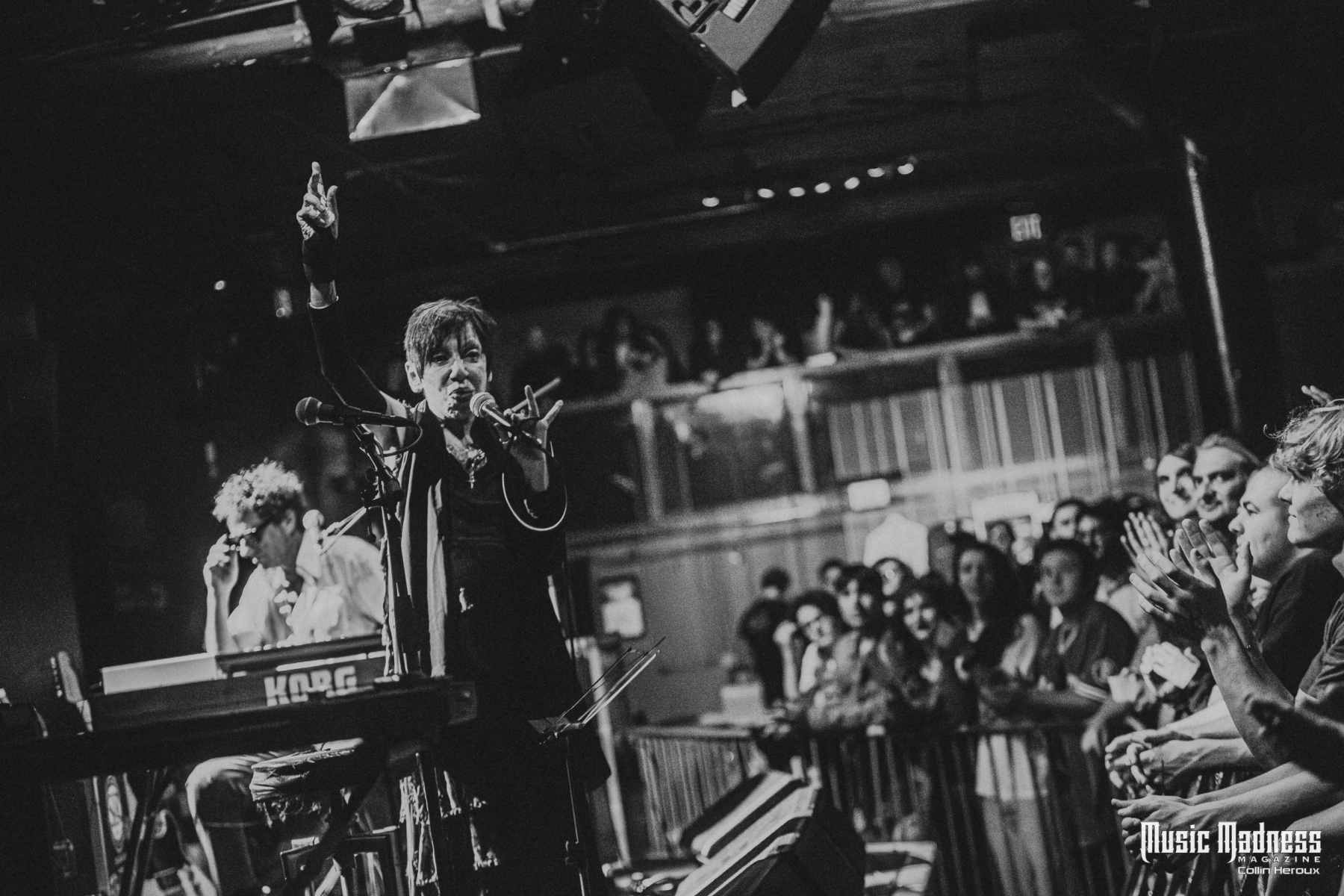
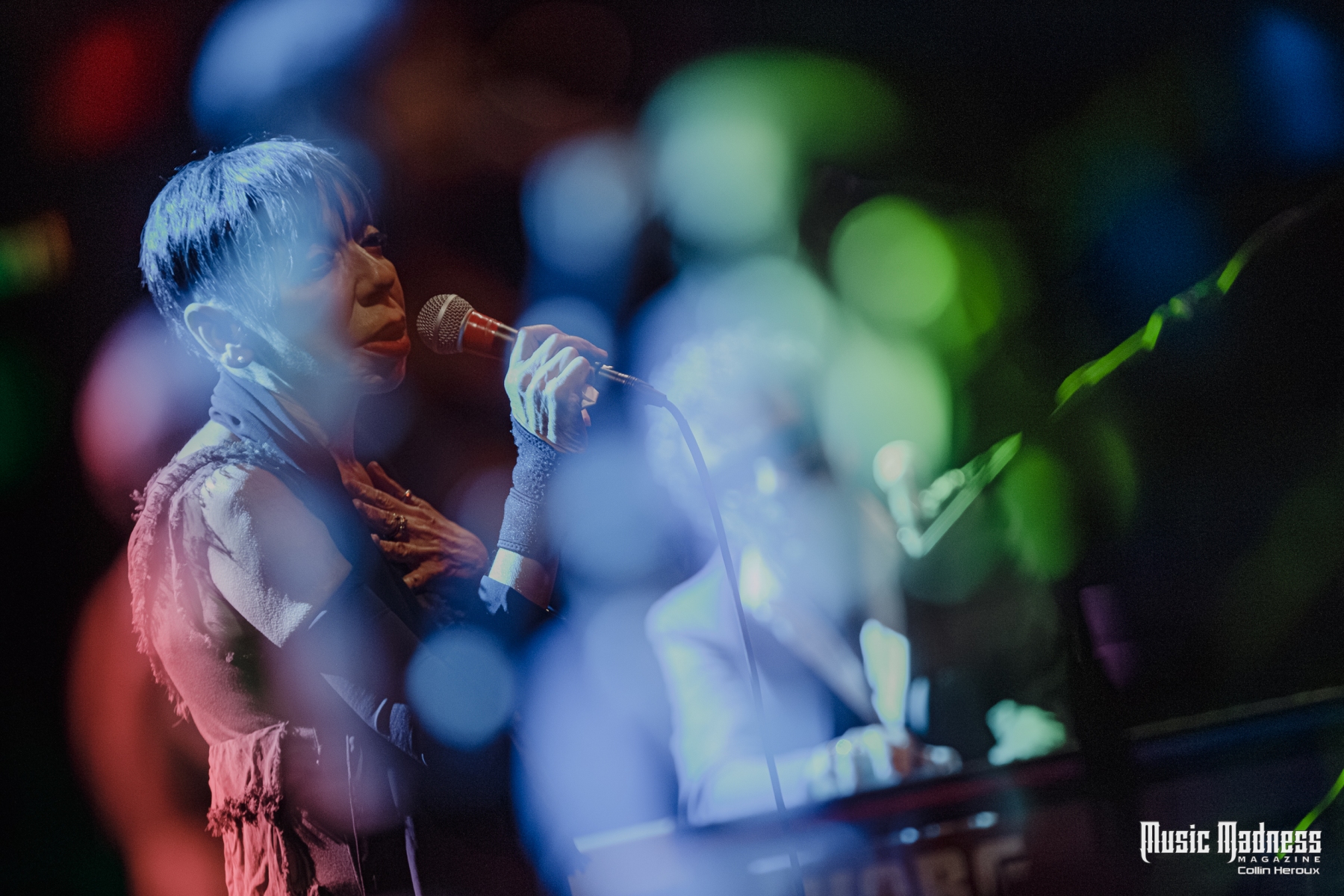
Swans have brought along friends and erstwhile collaborators “Little Annie” Bandez and Paul Wallfisch to open the show – it’s no surprise to confirm that Bandez is a veteran of NYC music and performance art; she radiates a near-mystical aura as her wide, expressive eyes seem to scan each and every face in the crowd without exception, reaching out. Wallfisch begins the set by triggering a massive, ominous drum beat that would be right at home in the early Swans canon – Bandez shimmies out from backstage, and the first song follows that slow cadence, before Wallfisch is standing at the lip of the stage with some lightning-bolt shaped instrument that makes a sound akin to a dozen swarms of bees. From there things become more gentle, almost fairytale-like, focused on piano. Bandez reminds of Julee Cruise in the way she commands the room with her voice, even when it rises barely above a whisper. The pair cover Lou Reed’s ‘Perfect Day’, which genuinely feels like a heartfelt tribute to a peer. Bandez’s slow, deliberate hand movements feel like she’s performing an incantation, and the whole performance carries a charge of uncertainty, like some aspects of the set are being pieced together in that moment and not before – a mood which very much continues when Swans take the stage after Bandez and Wallfisch have departed.
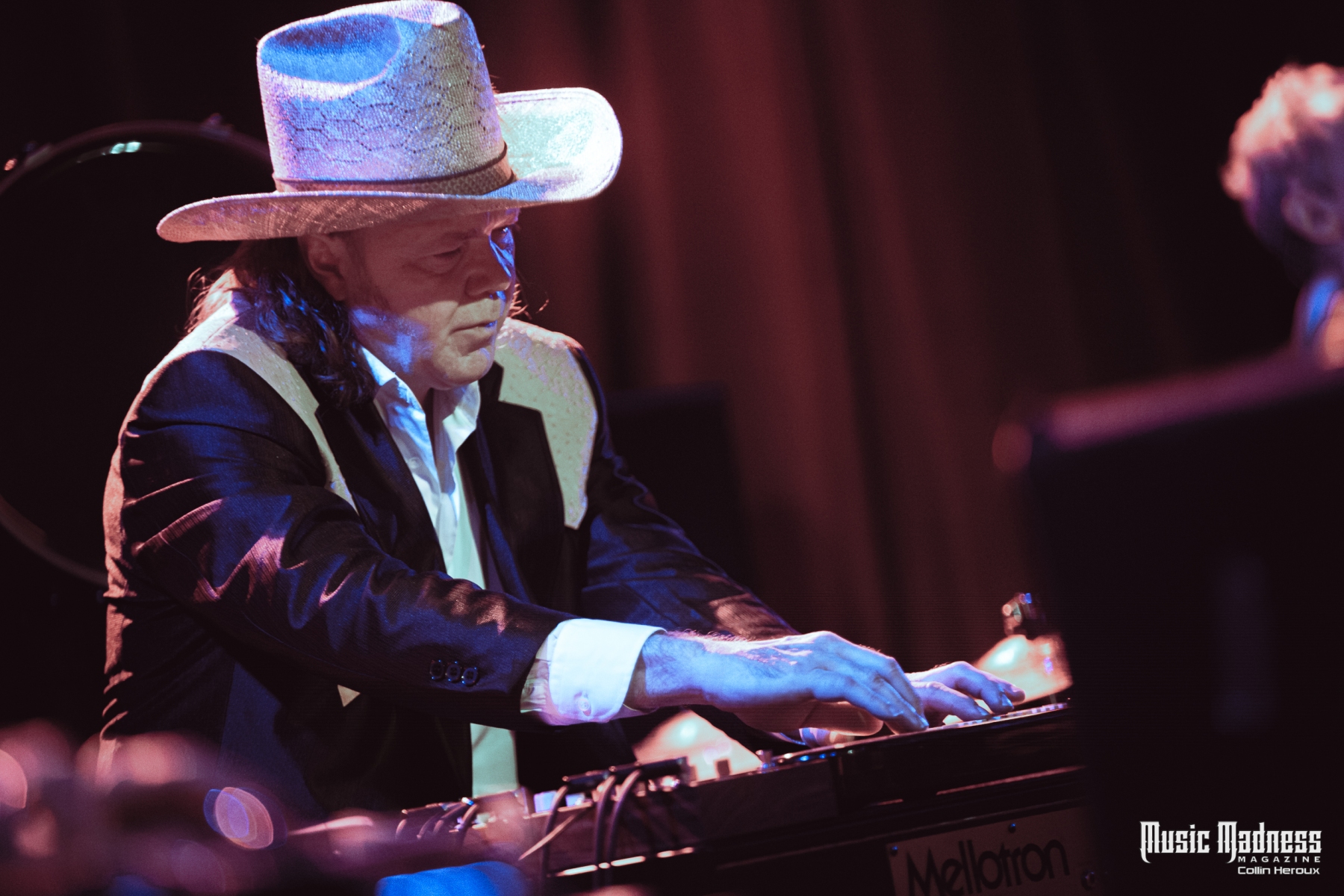
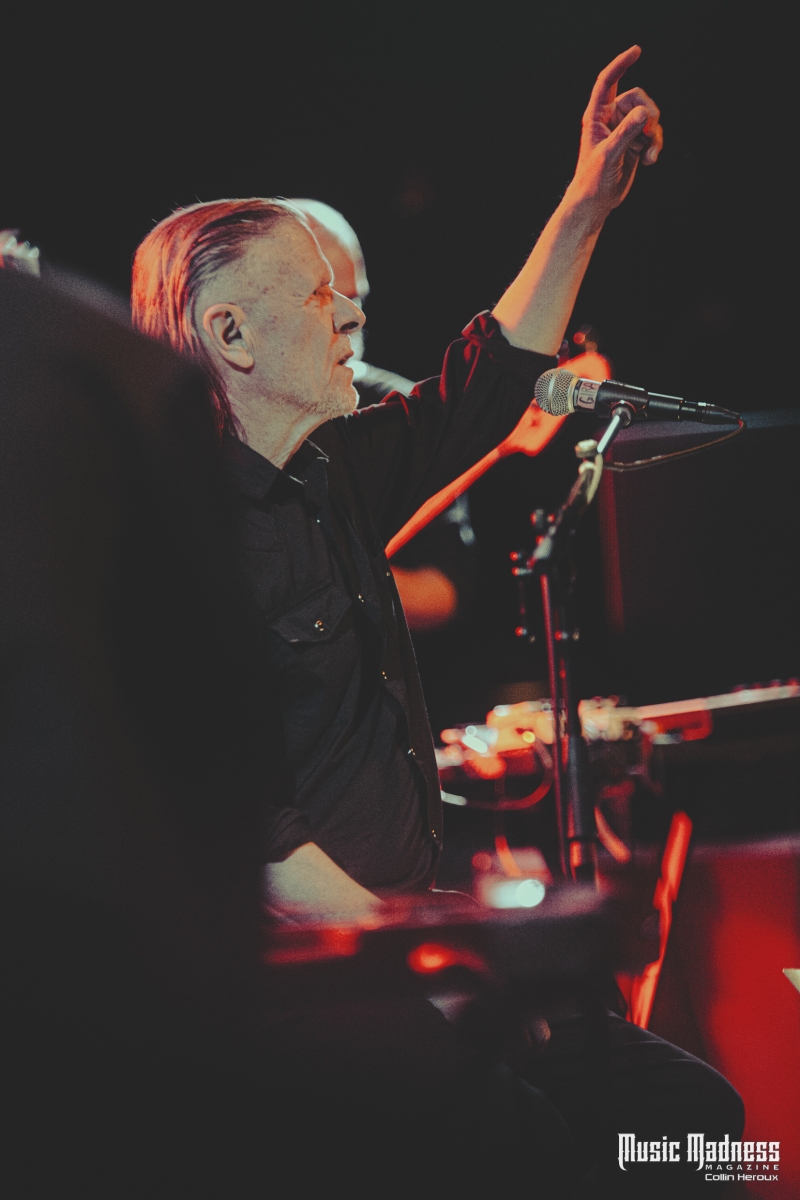
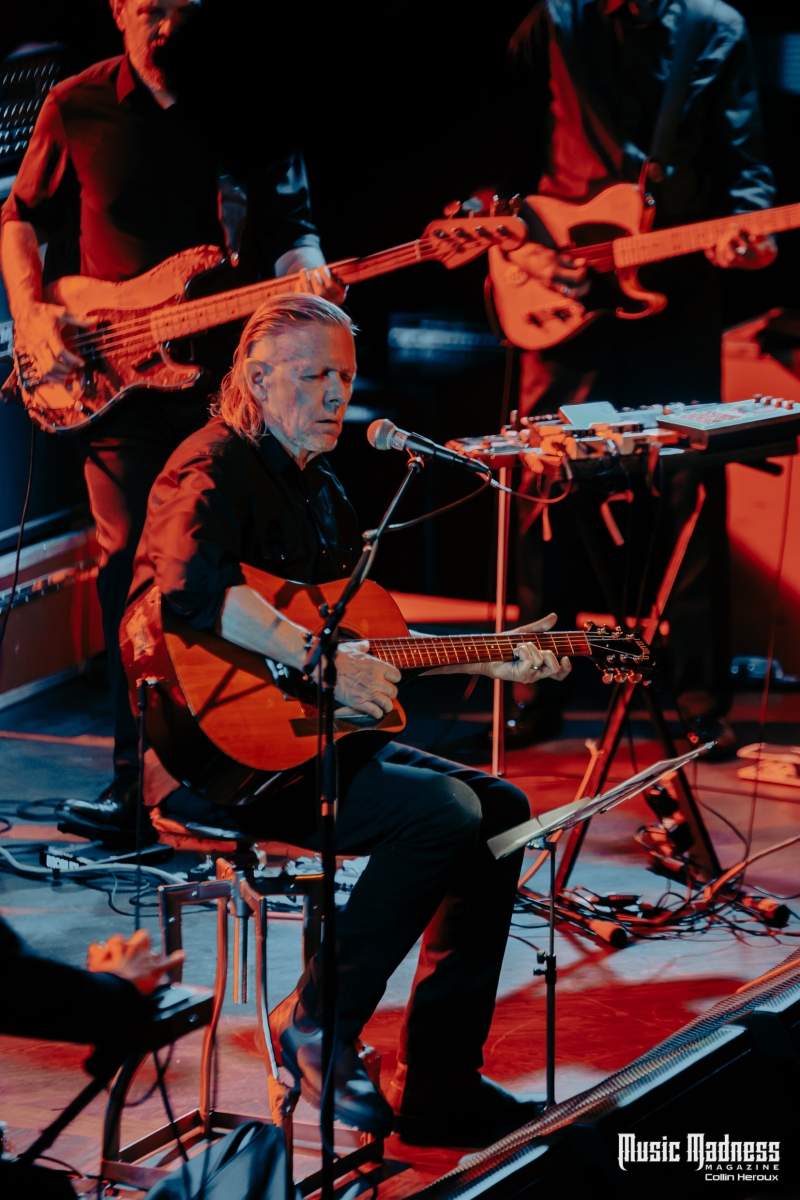
Unlike Little Annie, Michael Gira focuses far more on the other six members of his band than he does on the audience, once he’s come to the front and wound his hand towards the crowd, nodding a slight bow. And yet, so much is told in just the looks shared between these musicians, who act as the vital organs of a hulking, living creature. There don’t seem to be hard-coded transitions between parts of the songs they construct as there would be in sheet music; simply shifts in mood that they reach whenever the feeling strikes. A change is ensured, but exactly when it arrives feels like it is divined by a collective consciousness. The band take their time coming to life, and with his eyes and hand gestures Gira modulates things to his liking. After an uncertain amount of time, the first clear vocal passage finds Gira repeating, from his seated position, lines about “going under”… “under the water”. It’s fitting, as the undulations of the song, and the transition from loud instrument-led passages to quieter ones that let the vocals surface, all feels like a sort of tidal relationship. The first actual stopping-point, the end of ‘The End of Forgetting’, comes after more than thirty minutes.
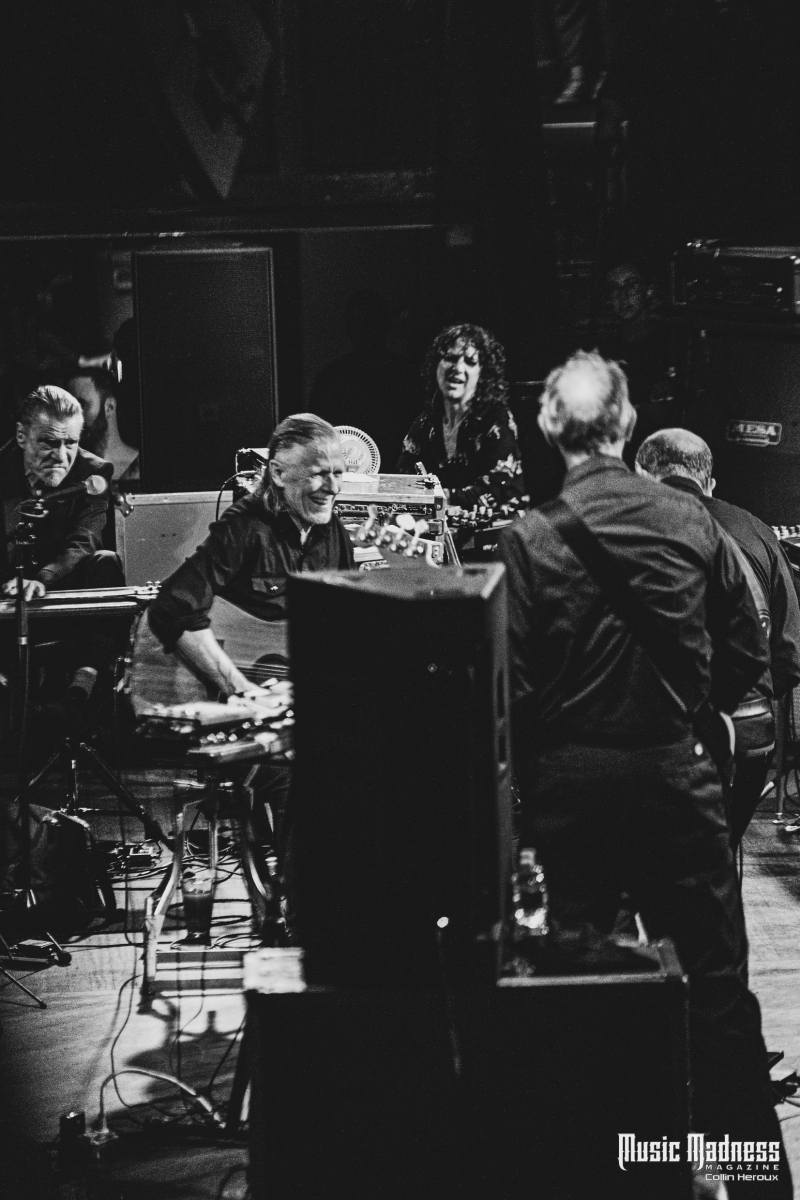
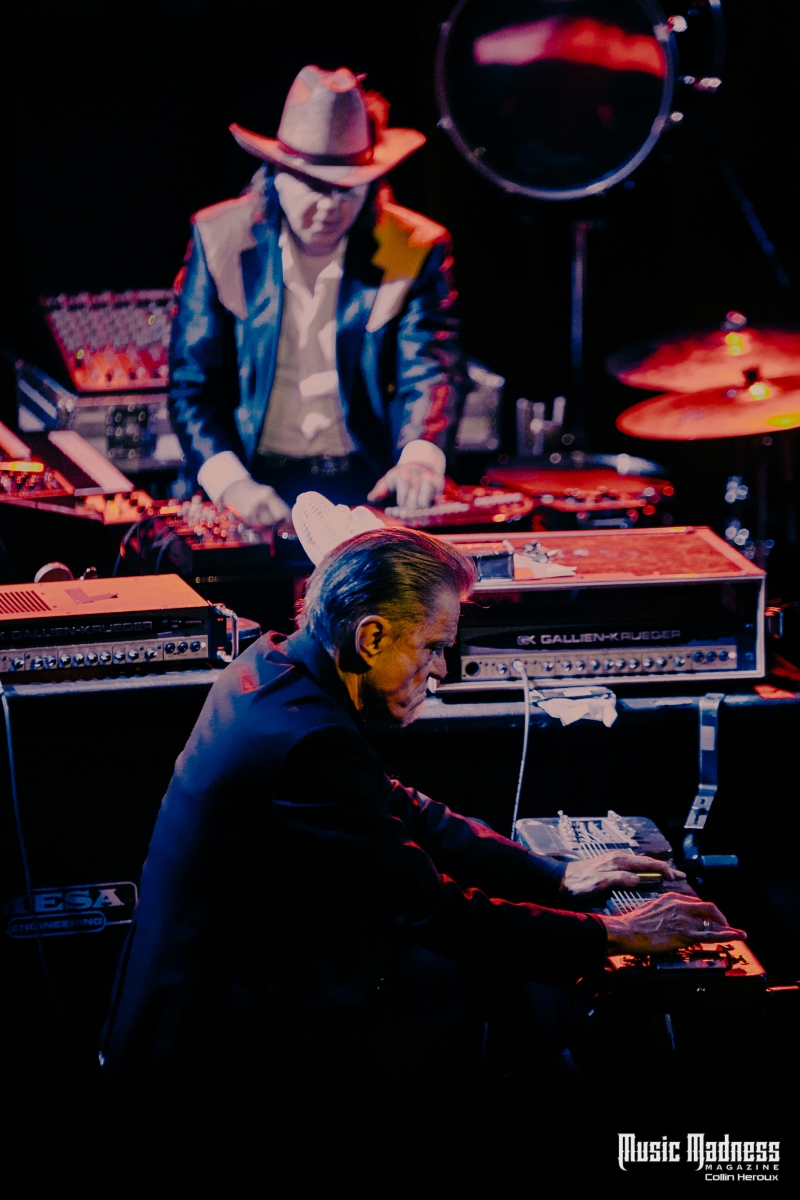
‘The Merge’ follows, and Gira introduces the song announcing that the band recently just wrote a new part for the song, “So… we’ll see how it goes.” He smiles, adding, “We kind of do that every couple days” – a strong hint that Swans will once again continue, in some form or another. The band are notorious for evolving their songs, even long after release – the title track of The Glowing Man started off as a composition called ‘Black Hole Man’ they played on tour more than ten years ago; and the gulf between the original mid-Eighties rendition of ‘Coward’ and the fantastic rework that appeared on live LP Not Here / Not Now is miles wide. This one is led by a particularly-weighted bassline from another frequent Swans collaborator, Christopher Pravdica. Pravdica is almost always at the root of the hypnotic thump of any of the band’s songs, but here he’s joined by Dana Schechter on a second bass – she had previously been accentuating the lap steel of Kristof Hahn with a second one of her own.
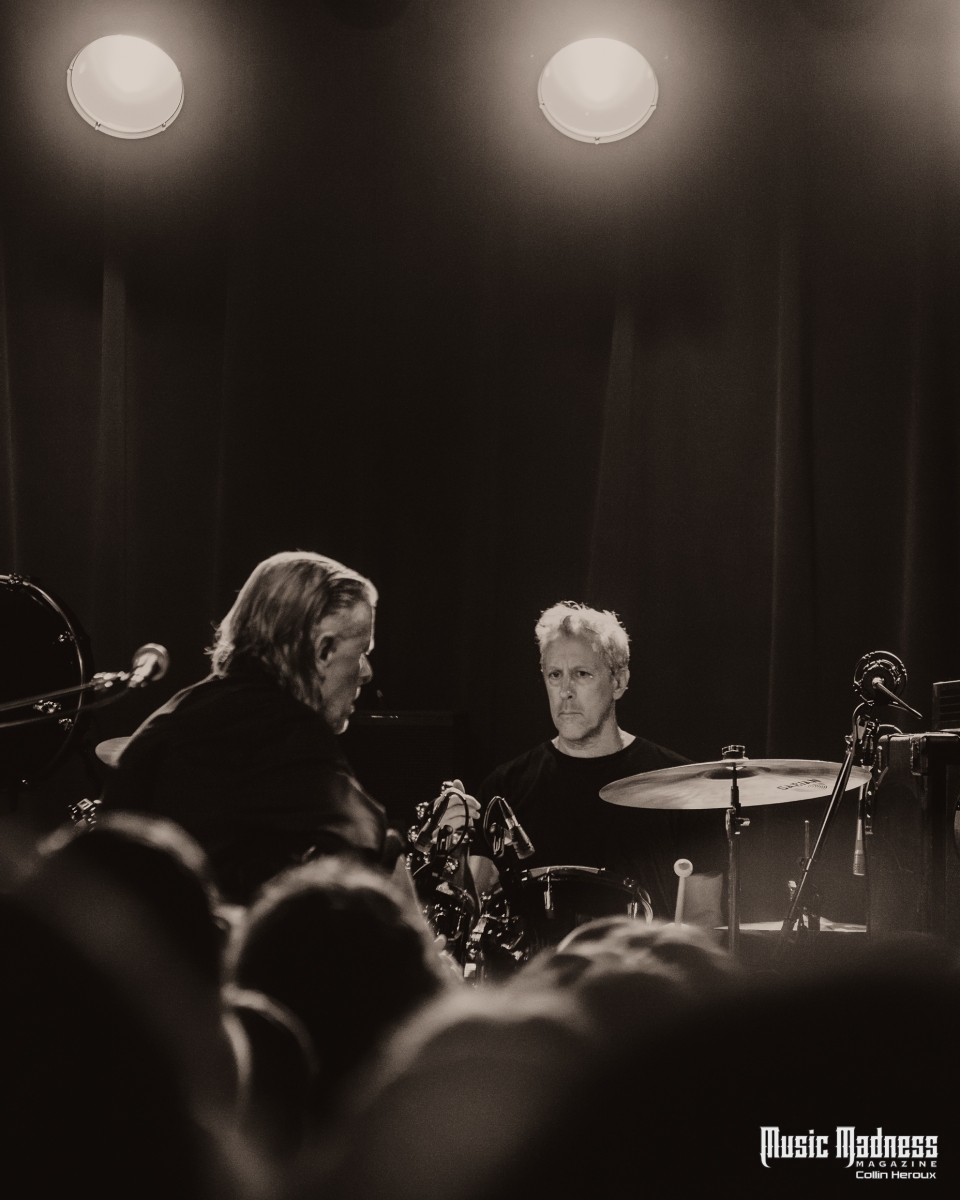
Gira rises from his seat and turns to the band, zeroing in on drummer Phil Puleo. He begins making rowing motions with his hands, as if pulling the sound out of the band as a whole at the tempo he’s dedicating to Puleo. The churn does fit the imagery of a big boat with dozens of men rowing, sailing through some choppy surf at the dawn of recorded history. But soon Gira’s hands start to move differently, more as if he were pushing aside dense underbrush in front of him. He turns to the crowd, and they begin to raise their own arms in response in the sweltering, sold-out room. Next to Puleo, man-of-many-instruments Larry Mullins is hammering a single tom at his left. With an entire room waving back at him, I recall perhaps-apocryphal tales of Gira’s early-days antagonism with crowds, but when the throng’ mirroring of his movements peaks, he simply turns back around and jokingly waves a single hand at waist-level for a moment before turning his attention elsewhere.
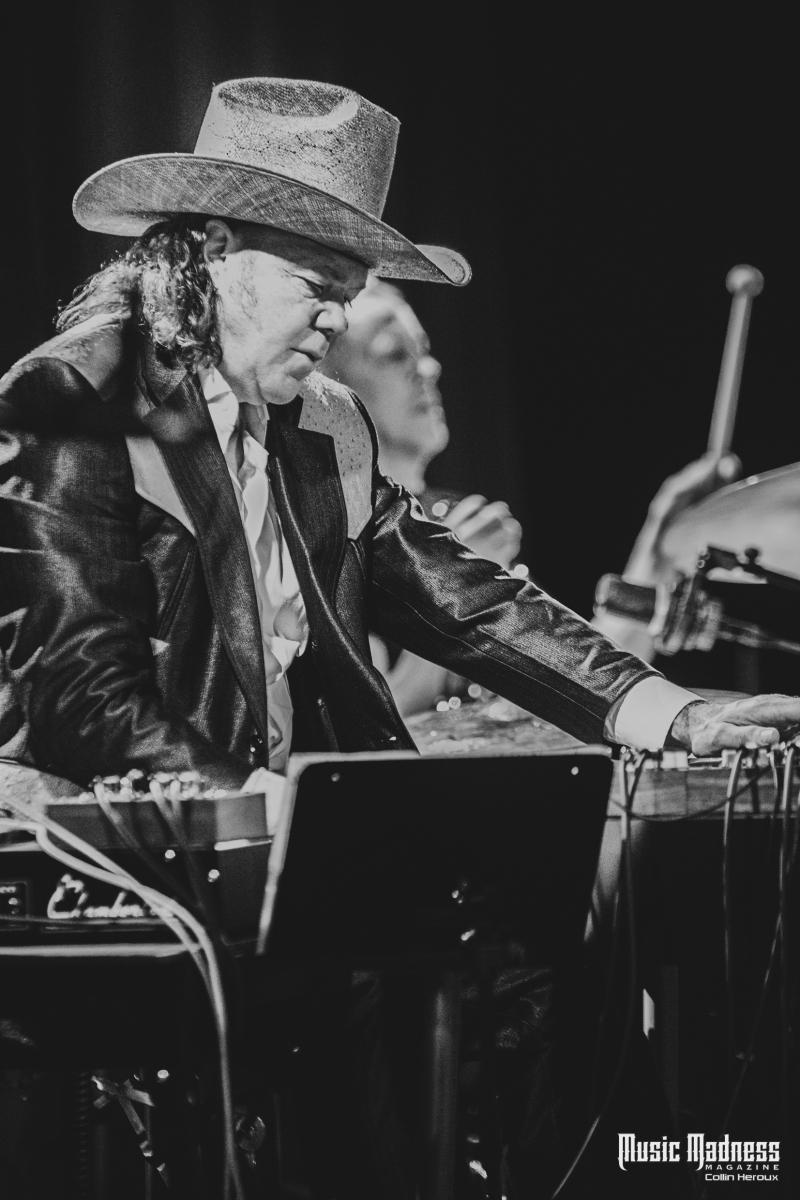
Onstage Gira is a complete master of his domain, adjusting things on the fly. During ‘The Merge’ he points at a pedal, and Pravdica quickly triggers it – whether or not it was something failed/forgotten, or a stylistic decision made in the moment, is unclear – both seem equally likely. He’ll direct the band, the sound mix, or simply spend lengths of time watching the rest of the band play out his creation while strumming along. At one juncture he takes up his acoustic guitar – not to play it, but instead to wave it fiercely above his head like a caveman would a club, much to the excitement of the crowd. When vocals emerge, they’re chiefly short, nigh-formless syllables that carry us all to the end of the song. ‘Paradise Is Mine’ is another study in how the band looks to each other for instruction, completely without words – all the more impressive considering that this is a band that has changed so much through the years. Time melts away until Gira begins counting 1-2-3-4, signaling the squall of guitars that ends the song. He stops for a moment to introduce the band: Schechter is the “scary lady from San Francisco,” Mullins the Tennessee “mountain chopper”, Puleo a “stealthy Italian assassin”, Hahn possessed of “a bee in his bonnet”, Pravdica the “warm Croatian lover”, and Westberg the “towering Swede from Detroit”.
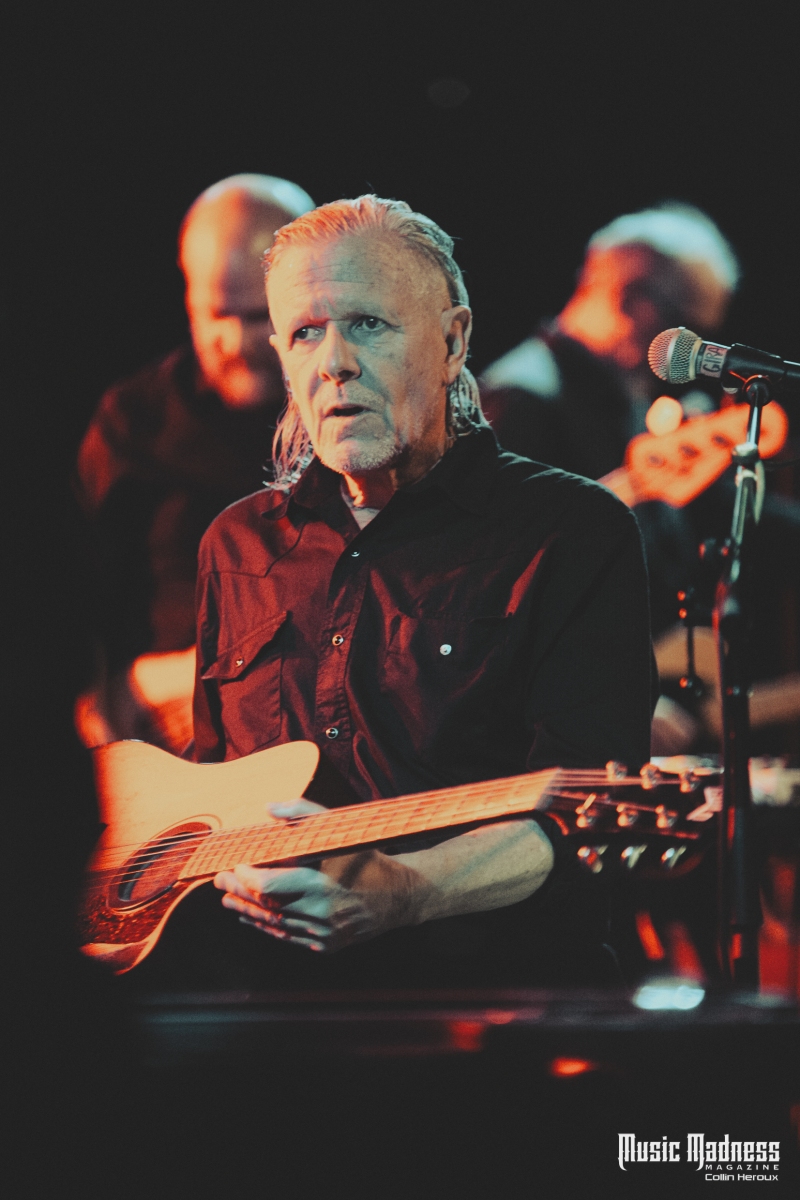
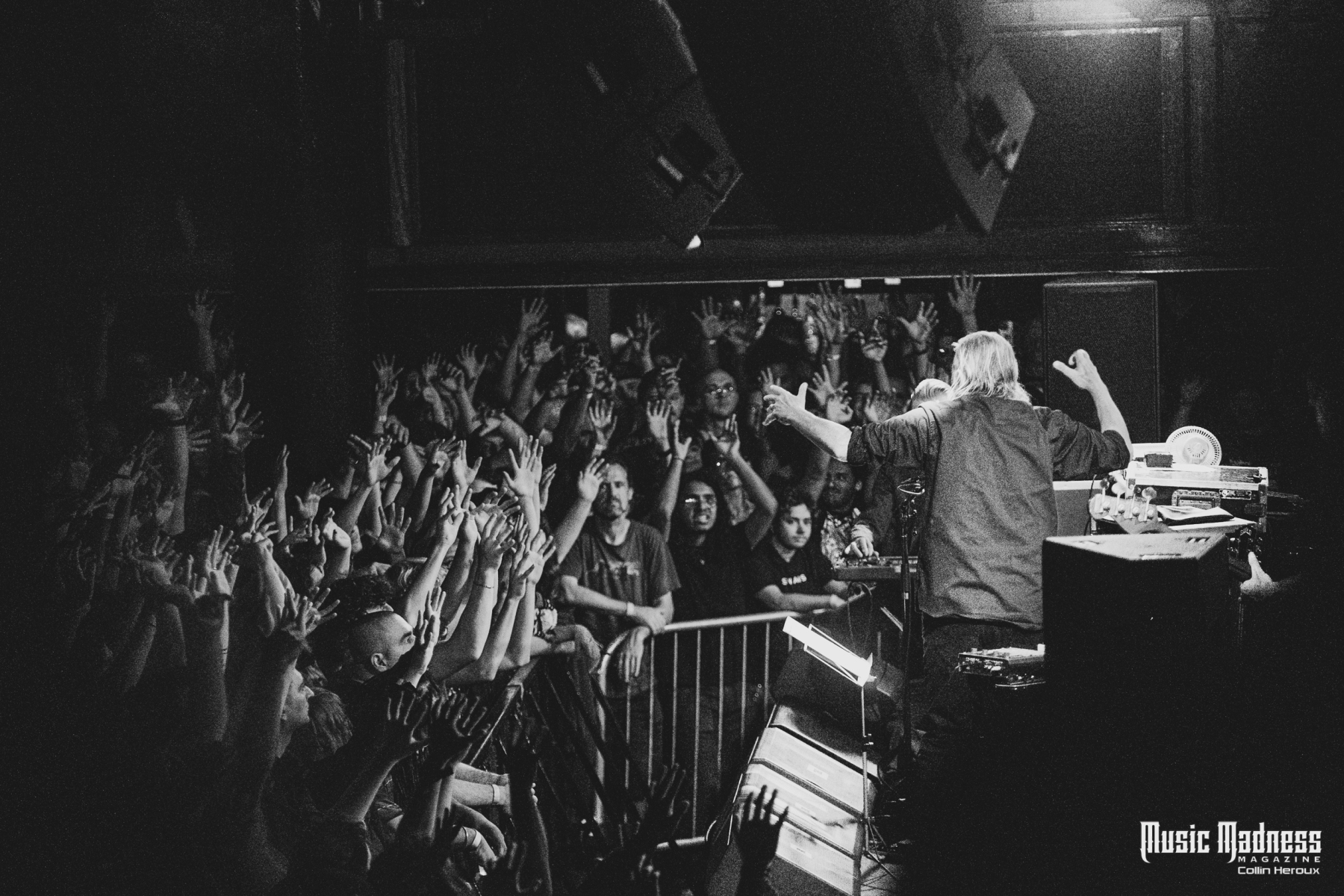
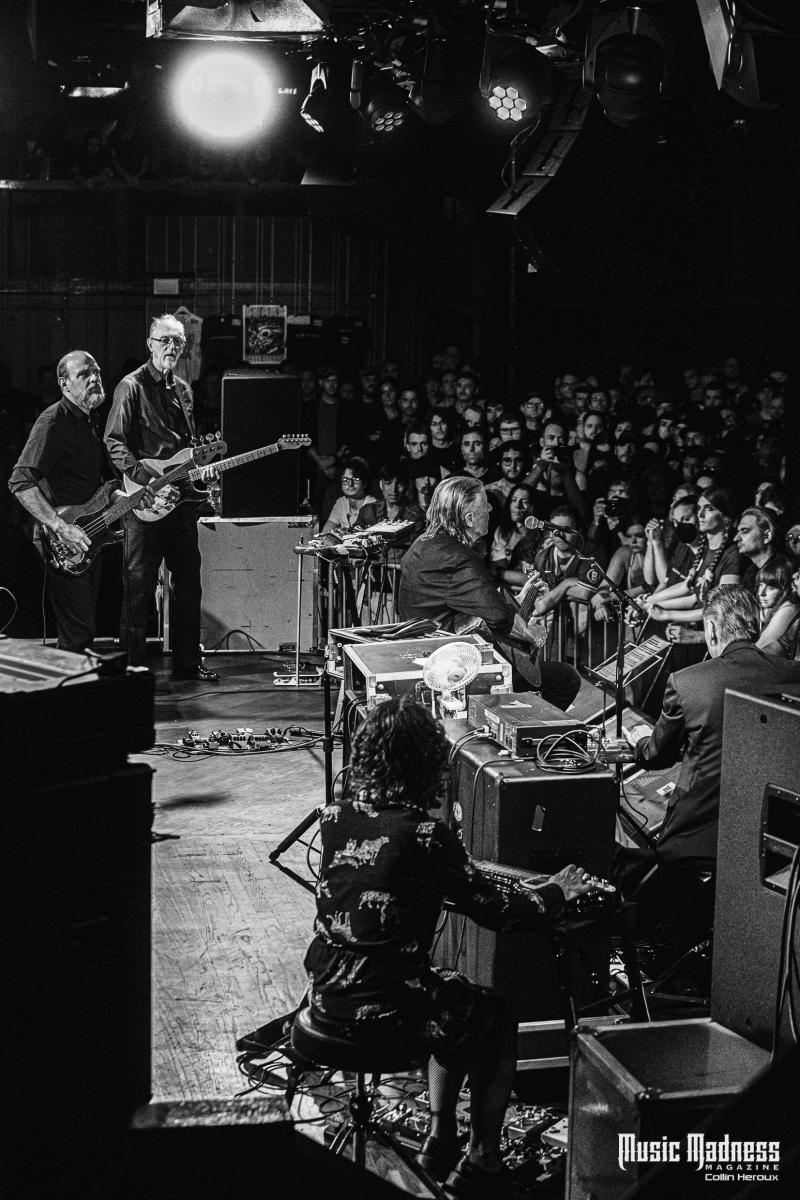
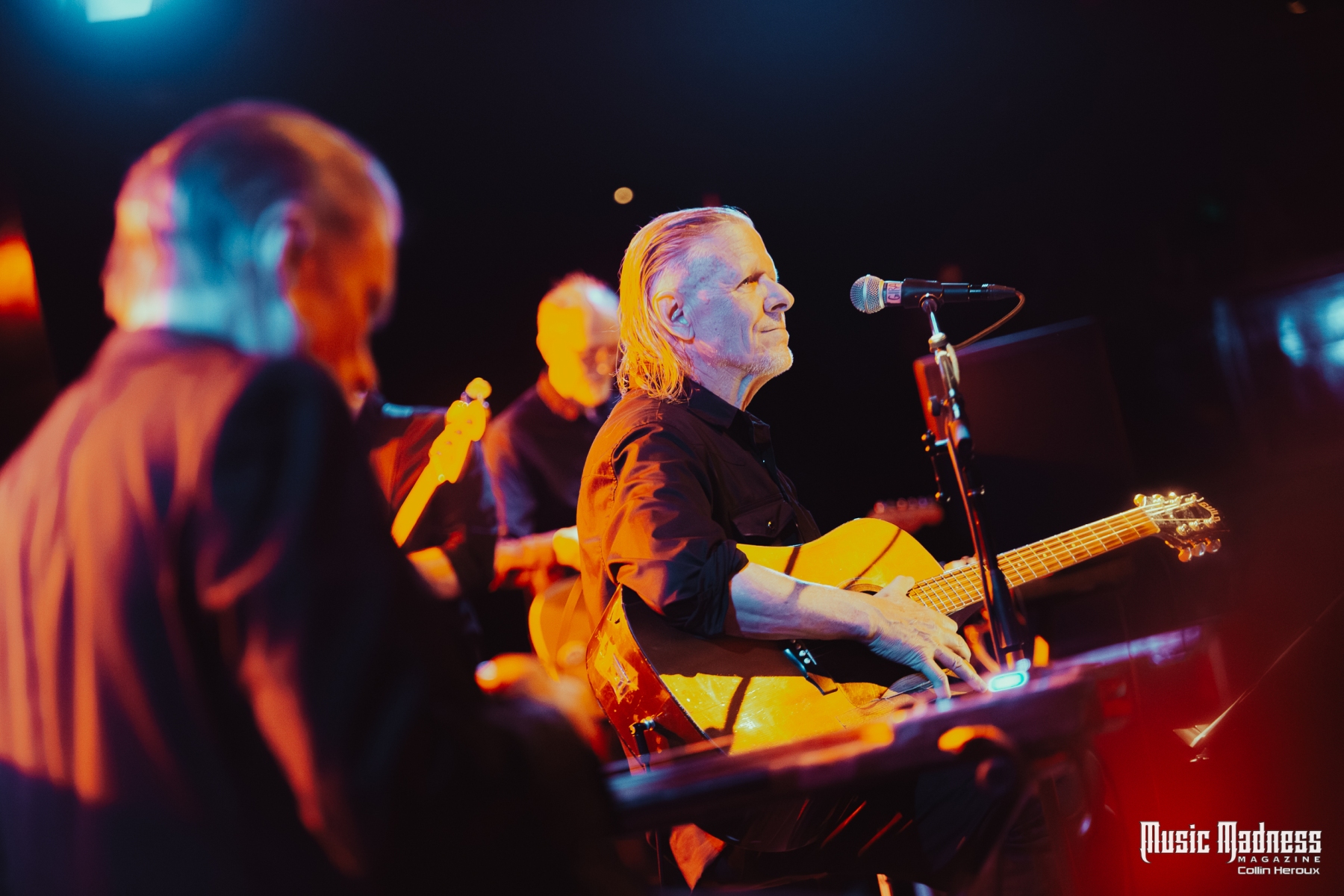
The night proves to be dedicated more to new material than to anything from Birthing, or any recent Swans releases for that matter. ‘Little Mind’ beginis as an ashen pastoral about impermanence and cosmic insignificance; but also Gira leaving behind his “cursèd, and immutable rage”. The furthest back the band looks for the entire evening is To Be Kind, and ‘A Little God In My Hands’ drops in like a colonnade of bricks, even moreso than the start of ‘The Merge’ had earlier. The arrangement is prime 2010s-era Swans, layering guitars on top of the building blocks of the bass more traditionally, without sacrificing a bit of the unmistakable pugilistic heft that made the band a singular figure from the beginning.
It’s fitting that Swans has morphed so much in its many lives, as the cyclical nature of birth, growth, and change has been increasingly at the center of Gira’s writing since he became a parent. On The Seer’s ‘Song for a Warrior’, he ascribed a mythical level of power to childhood, and what is a “little god” one can hold in one’s hands, having all sorts of infinitely undetermined, unquantifiable qualities, if not a newborn child? Much like the band and their songs come to life over the course of their performance, the lyrics, often fragmented and simple, can also be read as the musings of a nascent mind. If your earplugs fall sweatily out of your ears, you’ll hear the full, deafening extreme of Westberg, Hahn, and Schechter’s strings wrap around your ears in a tempest. “What’s my name?” Gira asks repeatedly. Hahn’s right hand moves like a centipede, waiting for the final declaration: “the Universal Mind!”. Gira stands and scans the crowd, a smile creeping across his face. He turns away again, which seems to be the final signal for the guitars to spike in pitch, then the song concludes abruptly with one final strike.
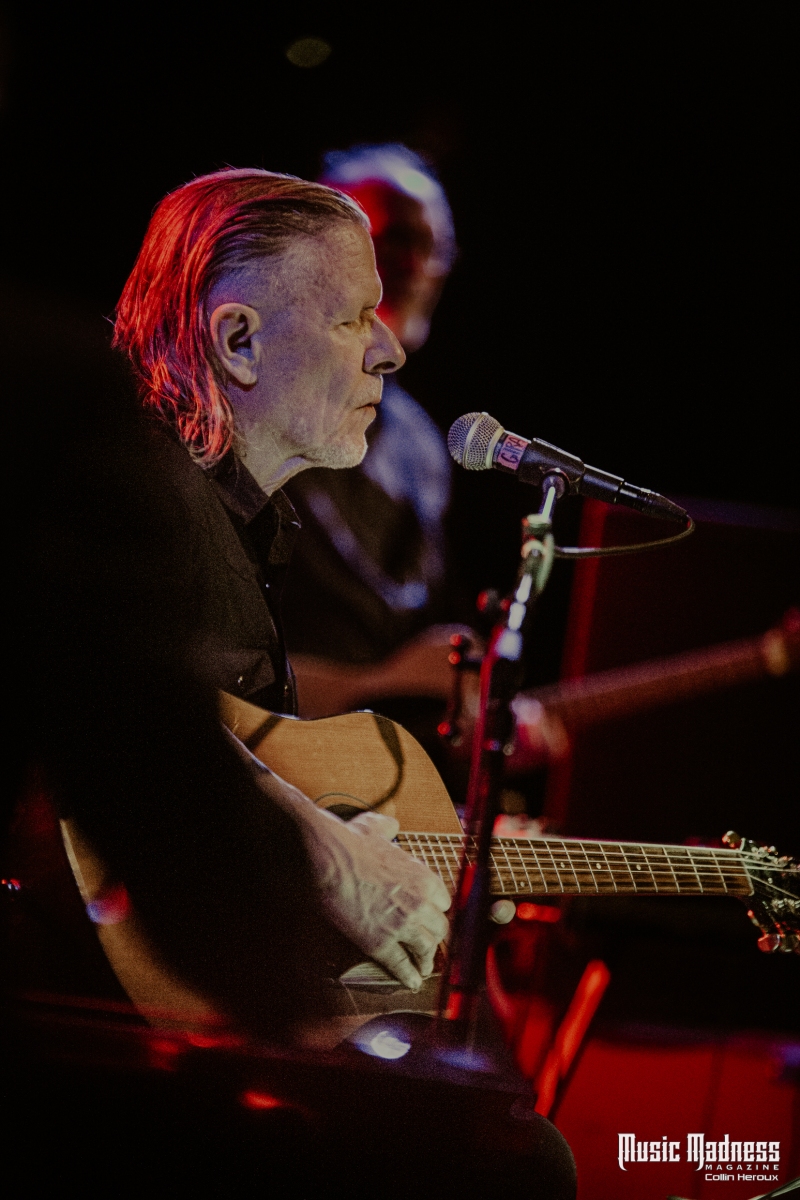
Gira thanks “beautiful and delicious Annie and Paul” for starting the show before the band moves into their final song. Instruments begin warbling, Gira chants for a time, and next he rises and walks around to each individual member of the band. Once again he turns to Puleo, “rowing” as if desperate to eke out every last bit of sound from the cymbals. He’s like a human fader, gain-staging this newer song in real time. When satisfied, he sits down, wipes his face, brushes his hair behind his left ear, and picks up guitar for the final time of the evening as he begins the quieter recitation of the song that seems to be titled ‘Newly Sentient Being’.
“Thousands of lines unraveling…
Changing… rearranging…
Imbecilic mind… beyond the reach of sights and time”
The themes of birth, infancy, and growth surface once again.
“All these insects,
All these germs,
All these fake inflatable humans
With their sterile plastic sperm…”
The spoken-word core of the song flips over into a single, sharp guitar ringing over the constant quiet drone. Oddly enough, if one were to isolate just this guitar part, a person might be forgiven for thinking it came from an 80s rock band; such is the power of context. Puleo’s snare chimes back in and everything begins to swell in volume into one last crescendo. He alters his drum pattern once more, and one by one the band members kill their pedals and mute their strings til it’s just drums, Hahn’s pedal steel drone, and Gira moving his guitar in front of the monitor to generate feedback. Gira plays a bit on harmonica, and speaks one final refrain:
“There is life.”
He stands again and conducts the band into their true conclusion. It’s been an hours-long event, a live study of incredible musicians as they watch and react to each other, creating in real-time. It’s not improvisation – the parts are concrete – but Swans, moreso than perhaps any other band, let the music live, breathe, and speak for itself as they play. There is life.
Photos and words by Collin Heroux